The restaurant business has changed dramatically in the last decade. A customer can discover a restaurant on one platform, order through another, pay digitally and leave a review before the kitchen has even had time to breathe. Yet beneath this increasingly seamless experience is a complicated web of software that has to work together without the customer ever knowing it exists.
For Wera Foods, that invisible layer has been the business.
Founded in 2015 by hospitality professional Mr.Kailash Chavan, Wera did not set out to become another name competing for restaurants' attention. Its journey began with an aggregator model before the company shifted towards technology services and eventually built middleware and API integrations connecting POS systems with major food aggregation platforms.
It was a rather unconventional position to occupy. While some restaurant-tech companies were busy getting their names in front of restaurant owners, Wera was making sure that the systems behind them could communicate.
And for years, that was enough.
The logic was fairly simple. Convincing a restaurant to abandon a system it was already using could be difficult, particularly when the market was still learning what online ordering and restaurant automation could actually do. Working with POS partners offered Wera another route into the ecosystem. Instead of chasing restaurants one by one, the company could become part of the technology infrastructure already serving them.
There was just one problem with the strategy: the people doing the work in the background rarely get remembered.
Mr.Kailash Chavan acknowledges that competitors such as Petpooja invested heavily in educating restaurants and building a direct presence in the market, while Wera concentrated on the backend.
That distinction is now becoming less relevant.
Wera is preparing to move in the opposite direction — from being the technology underneath other POS businesses to taking its own billing and ERP software directly to restaurants.
The company has been building its POS capabilities since 2017 and is now looking to package its technology for the end restaurant customer.
It is a significant change in strategy, but perhaps an inevitable one. The market that Wera entered more than a decade ago is no longer the same market. Restaurants are more accustomed to digital systems, online ordering and automated operations, while the technology providers themselves are increasingly competing for a larger share of the restaurant's technology stack.
Wera's answer is to move up the value chain.
The company has been recruiting experienced professionals from the restaurant POS industry as it prepares for the transition. Mr.Kailash Chavan's thinking is particularly pragmatic: rather than spending years experimenting with sales strategies and learning expensive lessons, Wera wants people who already understand the market to help shorten that learning curve.
In other words, the company is not trying to learn everything from scratch.
It is trying to buy back time.
That approach follows another important development in Wera's evolution. In 2023, the company attracted investment from a Singapore-based business that was looking for integration capabilities in India for services aimed at large international brands. According to Mr.Kailash Chavan, the chairman of the investing company is a former McDonald's president.
The investment gave Wera another reason to reconsider what it could become.
For a company that spent years being the infrastructure behind somebody else's restaurant technology, becoming the technology brand that restaurants themselves interact with is a very different proposition.
It also brings a new challenge.
Being good at building integrations is one thing. Convincing a restaurant owner to choose your billing or POS system is another. The latter requires sales, distribution, market positioning and, perhaps most importantly, visibility.
That is where Wera's current transformation becomes interesting.
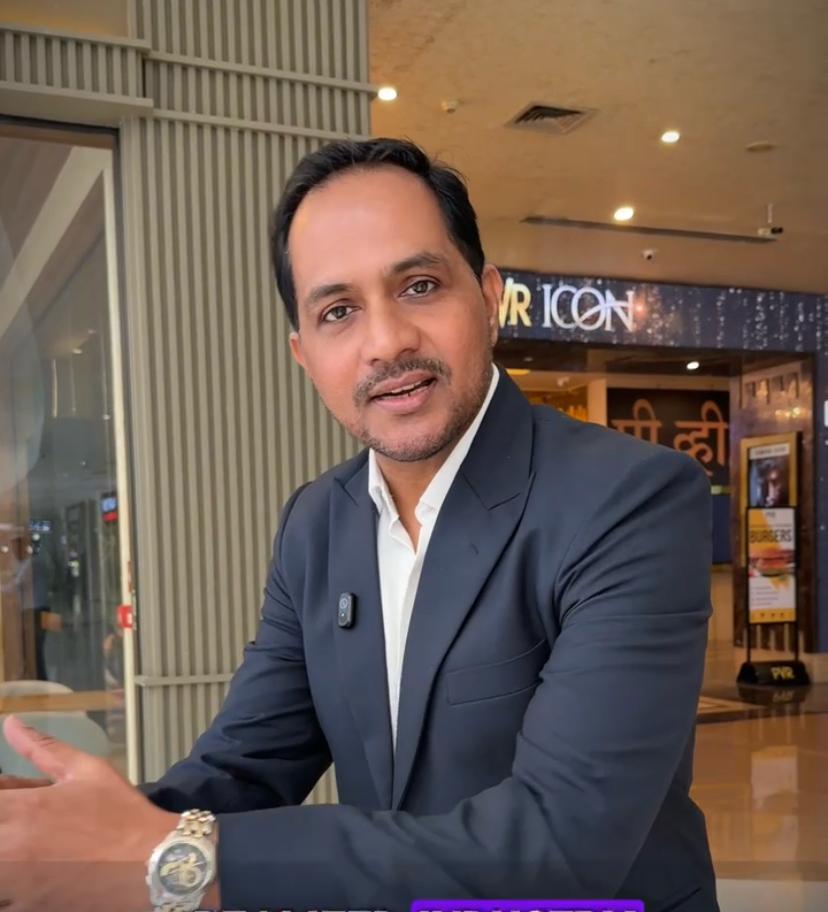
Mr.Kailash Chavan himself has spent more than two decades in hospitality and describes his earlier career as largely being behind the scenes. Now, as Wera moves towards the restaurant directly, the founder is also preparing to become more visible through industry conversations, podcasts and other platforms.
The company's next chapter, therefore, is not simply about another POS product entering the market.
It is about a business that deliberately spent years avoiding the spotlight deciding that it can no longer afford to stay there.
For Wera Foods, the technology has been built in the background.
The next challenge is to build the name in the foreground.