A girl’s future should never be determined by her period. Yet, for generations, menstruation has influenced whether girls attend school, women go to work, participate in sports, seek healthcare, or simply move through life with confidence. A natural biological process was made difficult by silence, myths, and shame.
But something has changed in India over the last decade.
The conversation that was once considered uncomfortable is slowly becoming ordinary. The word “menstruation”, once avoided even in public health discussions, is being spoken more openly. Families are asking questions. Girls are becoming more informed. Mothers are teaching daughters what they themselves were never taught. The transformation did not happen overnight. It began with people willing to enter the places where society had chosen not to look.
It began behind a closed restroom door
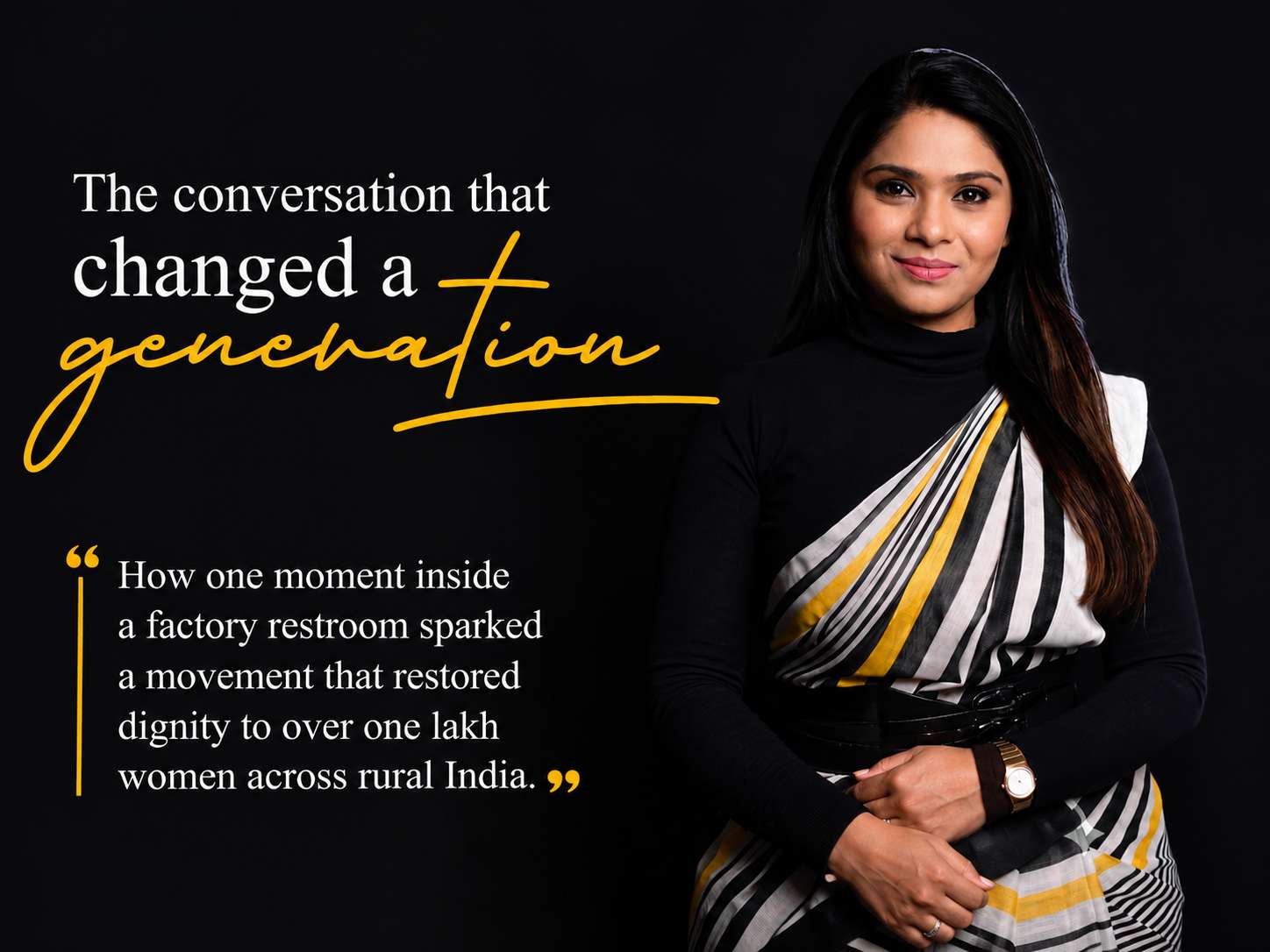
For World of Women (WOW), the journey into menstrual health did not begin in a remote village or a healthcare camp. It began inside a women’s restroom at a factory. What appeared to be a sanitation problem revealed something far deeper: generations of fear, lack of awareness, and silence surrounding menstruation.
The realization was simple but powerful.
This was not merely about infrastructure. It was about dignity, education, and, above all, a conversation India had never truly had.
That moment began a journey that has now lasted more than a decade. Before building an organization, WOW spent two years working alongside another NGO, traveling to communities, listening to women, and understanding the realities behind the stigma.
The early assumption was familiar: give women sanitary pads and the problem would be solved.
The lesson was bigger than a sanitary pad
In partnership with Padma Shri Arunachalam Muruganantham, popularly known as the “Pad Man of India”, WOW established a sanitary pad manufacturing unit through women’s self-help groups.
The idea was empowering. On the other hand, the reality was complicated. Electricity failures, machine breakdowns, logistics issues, raw material shortages, fluctuating costs, maintenance challenges, and labor challenges eventually made the initiative unsustainable.
The project failed. The failure revealed something important: menstrual dignity cannot be manufactured on a machine. It has to be built through awareness, education, healthcare, confidence, and community support. That lesson became the foundation of WOW.
Today, the organization has reached more than one lakh women across over 300 rural villages, working with doctors, educators, community leaders, volunteers, and families. Its work has never been limited to distributing menstrual products. It has focused on changing what women know, what families understand, and, ultimately, what communities believe.
From myths to knowledge
WOW’s approach rests on five pillars of menstrual dignity.
The first is breaking myths, making it clear that menstruation is not a curse, a disease, or something impure.
The second is health and nutrition, helping women understand their bodies, hydration, nutrition, and hormonal health.
The third is menstrual management, from understanding menstrual products and safe hygiene practices to proper disposal and the safe use of reusable cloth, where preferred.
The fourth is movement and self-care, including simple yoga practices and stretches that can help women manage cramps, back pain, and fatigue.
The fifth is practical support. Participants receive menstrual care kits containing sanitary products, hygiene essentials, and educational material that answers questions many girls are too afraid to ask.
Because knowledge is often the first step towards dignity.
The conversation was never only about women
One of the most telling moments came not in a classroom, but inside a temple.
A priest invited WOW to conduct a menstrual awareness program on the temple premises, a striking setting given the generations of exclusion associated with menstruation and places of worship. Women from Hindu, Muslim, and Christian families sat together, asked questions, and shared experiences.
Then men who had been listening quietly from outside came forward. Auto drivers and daily wage workers asked if they could take menstrual kits home for their wives and daughters.
One of them said, “We never realized what they go through.” That moment captured another important shift.
From avoiding the word to saying it aloud
When WOW began its work, some donors supported the cause only on one condition: do not use the word “menstruation”.
Call it women’s welfare.
Call it community health.
Or, call it anything else.
But how could girls learn to ask questions without fear if society was still afraid to name what they were experiencing? The demand for conversation became impossible to ignore. At WOW’s first awareness program, Anganwadi workers expected perhaps 20 or 25 women. The organization carried 100 menstrual kits. Nearly 450 women arrived. There were not enough kits.
What looked like a logistical failure became a revelation. Women had not lacked interest, but a safe space to speak and a demand for understanding.
India began talking about menstruation
Over the same decade, the national conversation began moving. When Prime Minister Narendra Modi spoke publicly about menstrual hygiene during his Independence Day address, menstrual health entered a much larger public conversation. Films, public figures, and growing dialogue further helped bring periods out of whispers and into the mainstream.
No single speech or film transformed India. But together, these moments helped create a country where menstrual health could be discussed more openly.
And that openness matters.
Transformation is not always measured by a statistic. Sometimes, it is measured by who feels confident enough to ask a question.
The clearest measure of change- a mother and daughter conversation
Perhaps the most powerful evidence of change came during a Mother’s Day program at Parikrama. A young girl confidently explained how she managed her periods, cared for her health, and understood her body. When asked where she had learned it all, she smiled and said her mother had taught her.
The mother had once attended a World of Women menstrual awareness program herself.Years later, she was passing that knowledge to her daughter.
“I learned from World of Women. Today I can teach my daughter.”
That moment marked something bigger than the success of an awareness program. It showed that the conversation had crossed a generational line. One informed mother had raised one informed daughter. And one day, that daughter could raise another informed generation.
That is how societies change, not through one event, but through one family at a time.
The India that is emerging
The conversation is no longer confined to underserved rural communities.
Today, WOW is also engaging with students in some of India’s most privileged schools and colleges, discussing hormonal health, lifestyle, nutrition, fertility awareness, emotional well-being, and sustainable menstrual choices.
The challenge has evolved, and so has the conversation.
The goal now is not simply to ensure that women have access to menstrual products. It is to build a generation that understands menstruation without shame, knows when healthcare is needed, and grows up recognizing that a period should never define a woman’s potential.
WOW’s next vision is to create Green Period Villages - communities where menstrual education, sustainable products, responsible disposal, informed healthcare, and confidence come together. The ultimate measure of success may be surprisingly simple. A young girl, hearing that menstruation was once considered taboo, was genuinely puzzled.
“Really? People were afraid to talk about periods?”
That question would mean the conversation had finally done what it set out to do. It would mean silence had become knowledge. Shame had become confidence. An informed mother changed her daughter's life.
When one woman is educated, she empowers a family. When one mother is informed, she transforms a generation. And when a generation grows up without fear of its own biology, a nation truly progresses.